Review: Custom Woodland Deer Embroidery Design
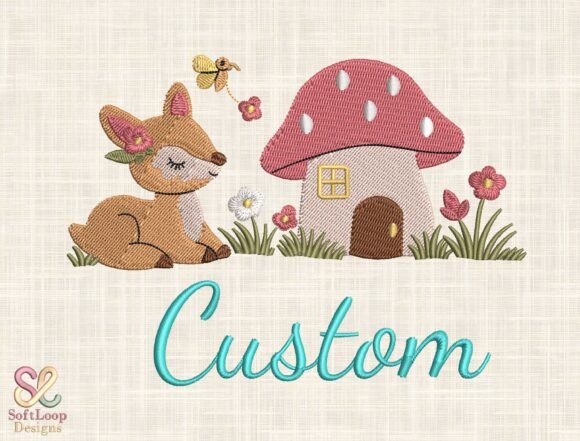
As a designer who has spent countless hours digitizing and testing patterns, I approach every new machine embroidery design with a critical eye. It is not enough for a pattern to look cute on a screen; it must hold up under the needle, survive the wash cycle, and appeal to the end customer. Recently, I evaluated the Custom Woodland Deer Embroidery Design, a charming piece featuring a sleeping baby deer nestled beside a whimsical mushroom house. Here is my practical assessment of how this design performs in real-world embroidery projects.
First Impressions and Visual Mood
The immediate impact of this design is one of softness and tranquility. The composition balances organic curves with playful elements, creating a mood that is perfectly suited for the Nursery category. The sleeping fawn suggests peace, while the mushroom house adds a touch of fantasy without being overly cluttered. From a layout perspective, the elements are grouped tightly, which is beneficial for stability during stitching. However, the visual personality relies heavily on smooth transitions between the animal’s form and the surrounding flora. For a handmade product intended to soothe or delight, this aesthetic hits the mark. It avoids the harsh, jagged lines that can sometimes plague lower-quality digital files, offering instead a cohesive scene that feels intentional and warm.
Real-World Application: The Baby Blanket Test
To truly understand the value of an embroidery file, you must imagine it on a physical object. I visualized this design stitched onto a soft, minky baby blanket. This is a common request for Etsy sellers and craft business owners specializing in baby embroidery. In this scenario, the design’s moderate detail level works in its favor. It is intricate enough to look professional and valuable, yet not so dense that it stiffens the fabric excessively. When I consider using this for a personalized gift, such as a birth announcement item, the whimsical nature of the mushroom house provides a unique talking point. Customers are drawn to designs that tell a small story, and this pairing of deer and fungus does exactly that. It elevates a standard blanket into a keepsake.
Versatility in Apparel and Accessories
Beyond nursery decor, I see strong potential for this design in custom apparel. Imagine it placed on the left chest of a toddler’s sweatshirt or centered on a canvas tote bag design. For sweatshirt embroidery, the design’s closed shapes ensure that the underlying fabric does not peek through, maintaining a clean look. If you are running a small shop product line, this versatility is key. You can market the same digital embroidery file to parents buying for children and to adults who appreciate cottage-core aesthetics on their accessories. The scale appears adaptable, though I would recommend testing it at various sizes to ensure the smaller details, like the mushroom spots, remain distinct.
Technical Considerations and Stitching Performance
From a technical standpoint, the success of any embroidery project depends on stitch types and density. While I do not have the exact stitch count for this specific file, I can infer from the visual complexity that it likely utilizes a mix of fill stitch for the deer’s body and mushroom cap, and satin stitch for finer outlines or textural accents. This combination is standard for high-quality design assets. However, designers must be cautious with stitch density. If the fill areas are too dense, they can cause puckering, especially on lighter fabrics. Conversely, if the density is too low, the fabric may show through, ruining the solid color effect.
I strongly advise testing the design on scrap fabric before committing to a final finished product. Pay close attention to how the thread colors interact. Since the design features natural tones, choosing high-quality rayon or polyester threads will enhance the sheen and depth. For dark fabrics, you may need to adjust the underlay or use a white base layer to ensure the colors pop. This is particularly important for commercial embroidery where consistency across multiple units is required.
Challenges with Fabric and Hoop Size
Not every material is suitable for this design. Delicate, stretchy fabrics like thin jersey knits require a robust stabilizer to prevent distortion. The curved nature of the deer and mushroom means that any shifting during stitching will be noticeable. For embroidered patch creation, this design is excellent because the stable backing of the patch material supports the stitches well. However, if you are attempting to stitch this directly onto a curved surface like a cap, you must ensure your hoop size accommodates the full width of the design without compression. Small hoop sizes might require splitting the design or reducing its scale, which could compromise the clarity of the smaller details.
Enhancing Brand Value and Customer Trust
For small business owners and creative entrepreneurs, the choice of design directly impacts brand perception. Using a well-balanced, professional-looking pattern like the Custom Woodland Deer Embroidery Design signals quality. It shows that you care about the aesthetic coherence of your handmade product. When customers see clean lines and thoughtful composition, their trust in your brand increases. This design is particularly effective for holiday embroidery collections, such as spring or autumn releases, where woodland themes are perennial favorites. It also serves well in printable mockup presentations, allowing you to showcase the design on various products before physically producing them, thus saving time and resources.
Practical Designer Notes for Best Results
To get the most out of this design, follow these practical steps:
- Test on Scrap Fabric: Always run a test stitch-out to check for thread breaks or tension issues.
- Check Thread Contrast: Ensure your chosen thread colors provide enough contrast between the deer, the mushroom, and the background.
- Review Stitch Density: If the design feels too stiff after stitching, consider adjusting your machine’s tension or using a lighter stabilizer.
- Confirm Hoop Size: Measure the design dimensions against your available hoops to avoid resizing that distorts the aspect ratio.
- Inspect Small Details: Zoom in on the digital file to ensure tiny elements like the deer’s eye or mushroom gills are defined enough to stitch cleanly.
- Mockup Testing: Create black and white mockups to verify that the design holds its shape and readability without color reliance.
- Licensing Verification: Before selling items made with this digital embroidery file, confirm the license terms. Ensure you have the right to use it for commercial embroidery and finished goods sales.
In conclusion, the Custom Woodland Deer Embroidery Design is a strong contender for designers looking to add a touch of whimsy to their portfolio. It bridges the gap between cute and sophisticated, making it suitable for a wide range of Nursery and lifestyle products. By paying attention to fabric choice, stabilization, and thread quality, you can transform this digital asset into a stunning physical reality that resonates with customers and enhances your brand’s reputation for quality craftsmanship.